

A natural mineral that expands under heat, forming a barrier that cuts off fire from oxygen. Unlike powder, CO₂, and foam, it remains effective even when the battery itself generates an oxidizer during thermal runaway.
400%
Water absorption coefficient - cooling and electrolyte sorption
-200 to 1100 °C
Temperature range
17 / 83
Vermiculite/water ratio in AVD dispersion (%)

Universal fire extinguishers cannot put out a lithium-ion battery fire. During thermal runaway, the cell generates its own oxidizer and the temperature exceeds 1000°C. Without cooling and cell insulation, reignition occurs despite the flame appearing to be extinguished.
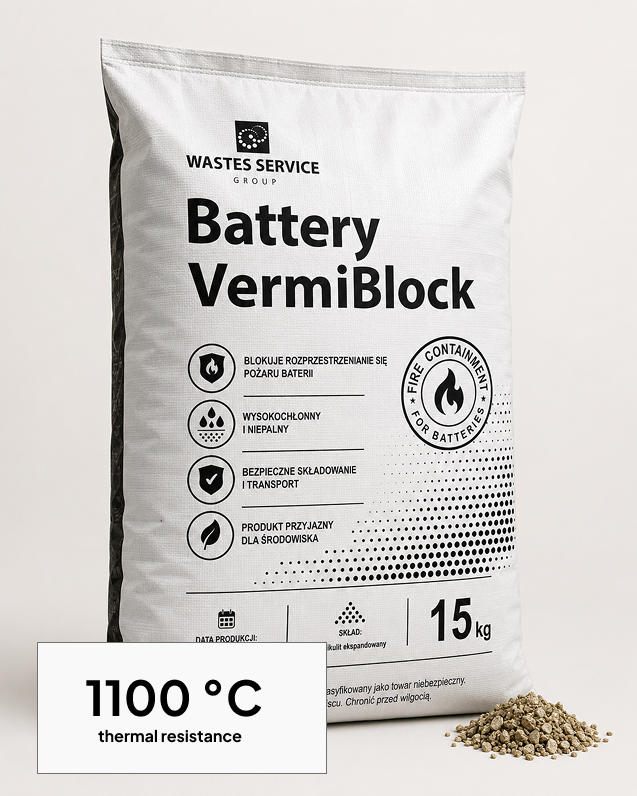
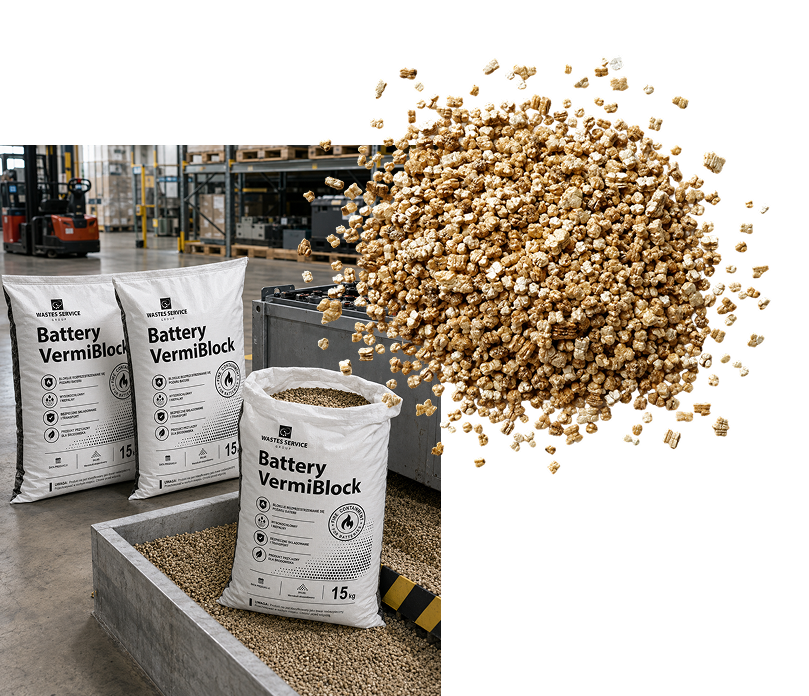
Expanded vermiculite is a natural clay mineral from the layered silicate group. When fired, its platelets exfoliate more than tenfold, forming a lightweight, porous material with exceptional thermal and chemical resistance. The very same structure that makes it an insulator in construction serves three functions at once in a battery fire.
01 / Insulation
02 / Cooling
03 / Sorption
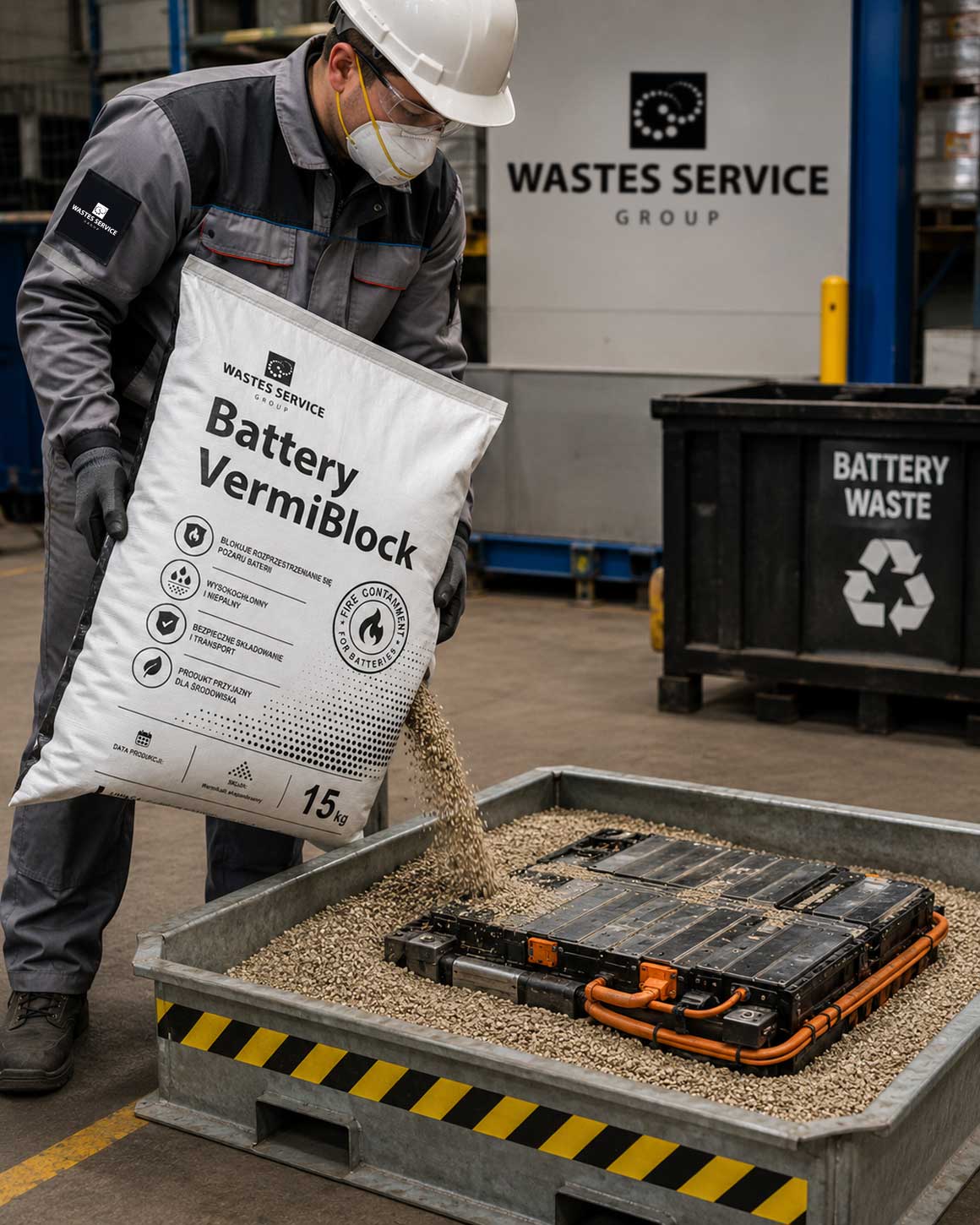
Approximate values for commercial fractions. If you have any questions about our offer, feel free to contact us: handlowy@wastesservice.com
Automotive and e-mobility
EV service centers, dismantling stations, NMC and LFP traction battery warehouses.
Energy Storage (BESS)
Battery containers, PV installations with storage, switchgear rooms.
Logistics and ADR Transport
Securing batteries in transport - both end-of-life and damaged units carried in special containers.
Recycling and Collection Points
Portable battery collection points, e-waste sorting facilities, processing plants.
Manufacturing and Intralogistics
Cell assembly lines, charging zones for forklifts and AGVs.
Fire Departments and Emergency Services
Equipment for rescue vehicles, post-incident smothering, securing vehicles after a fire.
It extinguishes the flame and simultaneously cools the cell, which is a prerequisite for permanently bringing the fire under control. A battery is always treated as hazardous material after an incident.
Vermiculite is a mineral raw material, non-toxic and non-combustible, free of fluorine compounds. It is biodegradable and environmentally harmless.
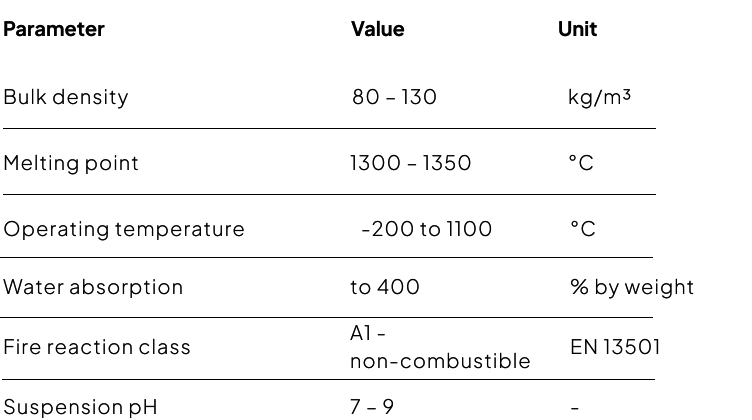
For packing in a steel drum: assess the condition of the battery. Pack a damaged or hot battery separately, never in a regular collection drum. Tape over exposed terminals with insulating tape so the batteries cannot come into contact with metal elements. Pour a layer of vermiculite onto the bottom of the drum, place a layer of batteries, and cover with vermiculite. Repeat in layers (vermiculite → batteries → vermiculite) so the batteries never touch the metal bottom or lid. Completely cover the final layer with vermiculite, close the drum with the lid and ring, label it according to the requirements (UN 3480), and place it securely on a pallet. The vermiculite must be dry and free-flowing. Never use damp vermiculite. If a battery starts smoking, hissing, or heating up during packing, stop work immediately, isolate the area, and notify the person responsible. Do not pack such a battery in a regular drum.
Visit us on LinkedIn and get to know us better. On our profile, we publish content related to the activities of our company, but also share news from the world of recycling, e-scrap and automotive.


